

Choosing amber glass boston round bottles bulk is about more than finding a familiar bottle shape at a competitive price. For cosmetic brands, skincare manufacturers, private-label companies, and contract fillers, the right bottle must work with the formula, dispensing system, branding requirements, filling line, and supply chain.
Boston round bottles are recognized for their cylindrical body, rounded shoulders, and relatively narrow neck. Combined with amber glass, this classic profile offers a professional appearance that works particularly well for serums, facial oils, essential-oil blends, hair treatments, botanical products, and other liquid personal-care formulas.
However, bottles that look nearly identical can perform very differently once paired with droppers, pumps, reducers, or other closures.
This guide explains seven essential factors to evaluate before sourcing amber Boston round bottles in wholesale quantities, helping cosmetic packaging buyers move from bottle selection to production with fewer surprises.
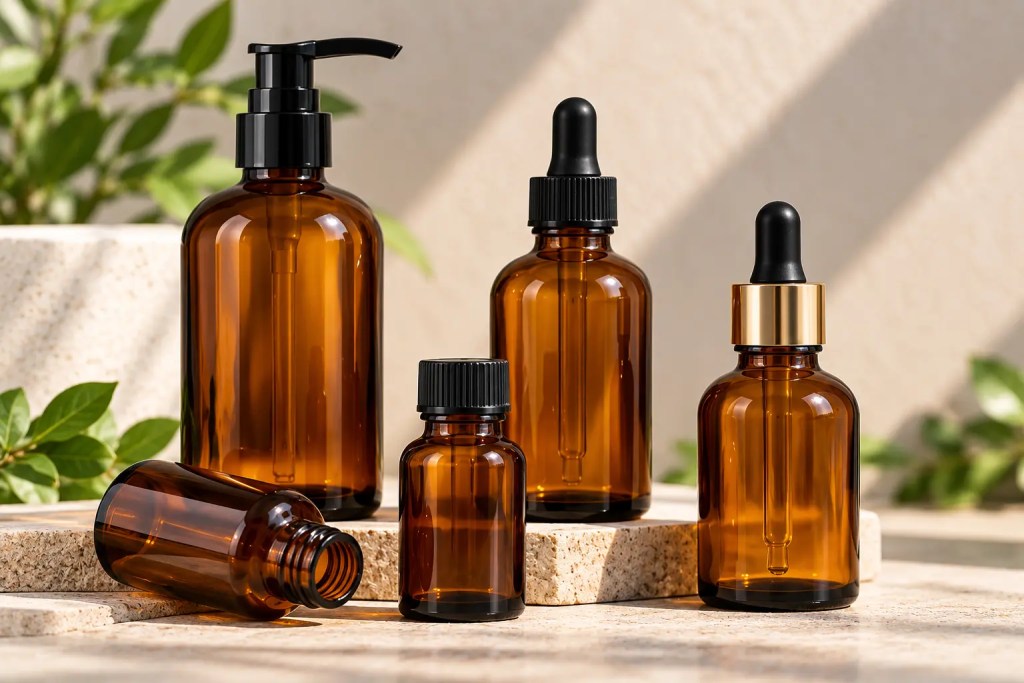
What Are Amber Glass Boston Round Bottles?
Amber Boston round bottles are cylindrical glass containers characterized by rounded shoulders that transition smoothly into a narrow neck.
Their simple geometry is one reason the design has remained popular across cosmetics, personal care, aromatherapy, pharmaceutical, and laboratory packaging. For beauty brands in particular, the bottle provides a clean canvas for labels and decoration while accommodating several dispensing formats.
The amber appearance is not only an aesthetic choice. Colored glass can help reduce the amount of light reaching the contents compared with clear glass, which can be useful when packaging formulas containing light-sensitive ingredients.
However, packaging suitability should always be verified against the actual formulation, required shelf life, closure system, storage conditions, and distribution environment.
When sourcing amber glass boston round bottles bulk, buyers should therefore evaluate the complete bottle-and-closure system rather than selecting a container based on color and capacity alone.
Why Are Amber Boston Round Bottles Popular for Cosmetics?
Beauty packaging has to balance several requirements simultaneously: formula protection, dispensing performance, shelf appeal, branding space, manufacturing efficiency, and cost.
The Boston round format addresses many of these requirements with a relatively straightforward design.
1. A Versatile Shape for Different Beauty Categories
The rounded shoulder and cylindrical body can work across multiple product categories without strongly limiting a brand to one visual style.
Common applications include:
- Facial serums
- Facial and body oils
- Essential-oil blends
- Hair and scalp oils
- Botanical extracts
- Massage oils
- Beard oils
- Liquid skincare treatments
- Aromatherapy products

2. Amber Glass Creates a Distinctive Brand Appearance
Amber glass is frequently associated with botanical, apothecary-inspired, natural, clinical, and premium skincare aesthetics.
It can be paired with black closures for a minimalist appearance, metallic components for a more premium presentation, or custom decoration for a distinctive branded finish.
This versatility makes amber Boston round bottles suitable for both established cosmetic ranges and emerging private-label brands.
3. Multiple Dispensing Systems Are Possible
Depending on the bottle neck finish and formula, Boston round bottles can be paired with different closure systems, including:
- Glass pipette droppers
- Treatment pumps
- Lotion pumps
- Screw caps
- Orifice reducers
- Tamper-evident components
Berlin Packaging APAC also offers customizable dropper caps and dispensing components for applications such as skincare serums, essential oils, cosmetics, and other liquid products.
7 Essential Factors When Buying Amber Glass Boston Round Bottles Bulk
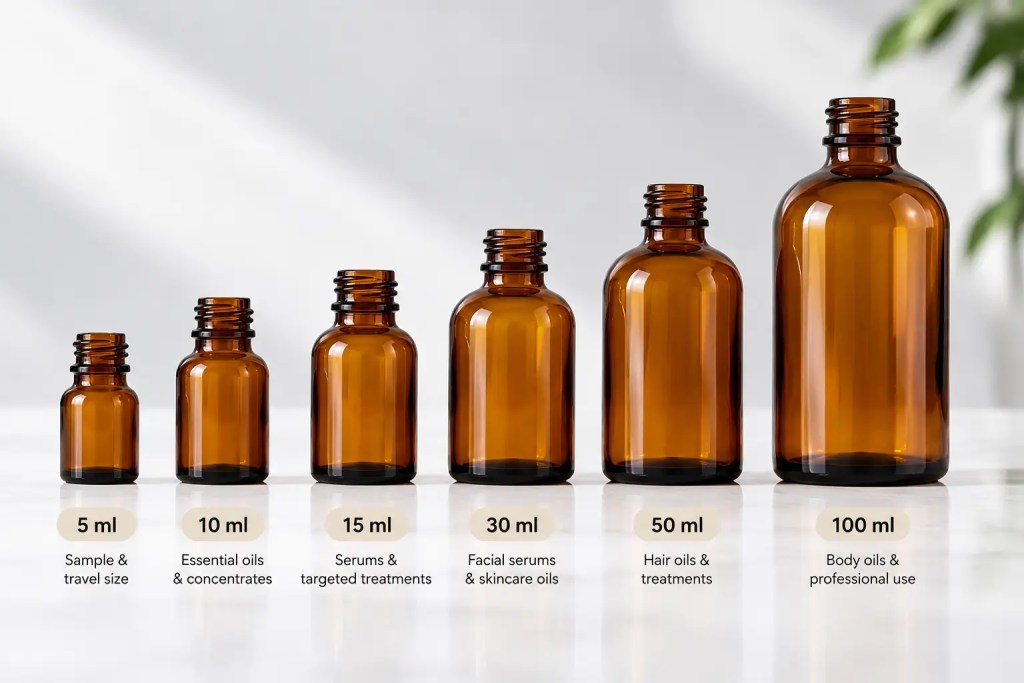
1. Choose the Right Bottle Capacity
Capacity is one of the first specifications to establish when sourcing amber glass boston round bottles bulk.
The ideal size depends on the dosage per application, expected usage period, retail positioning, formula cost, and distribution channel.
A simple sourcing framework is:
| Capacity Range | Typical Cosmetic Application | Buyer Consideration |
|---|---|---|
| 5–15 ml | Concentrated oils, samples, targeted treatments | Precision dispensing |
| 30 ml | Facial serums and oils | Popular premium skincare format |
| 50–60 ml | Hair oils, treatments, larger serums | Balance between retail size and portability |
| 100 ml+ | Body oils, haircare and professional products | Dispensing and handling become more important |
2. Match the Neck Finish to the Closure
A bottle is only one component of the primary packaging system.
Before placing a bulk order, buyers should confirm the bottle’s neck finish and its compatibility with the intended dropper, pump, reducer, or cap.
For example, a serum may require a pipette dropper, while a more fluid hair treatment might perform better with a pump or controlled dispensing component.
Important specifications can include:
- Neck finish
- Closure dimensions
- Thread compatibility
- Dip-tube or pipette length
- Bulb material
- Pump output
- Liner or sealing component
- Torque requirements
- Tamper-evident features, where required
Do not assume that two components are compatible simply because their nominal neck sizes appear similar.
Testing the assembled bottle, closure, and formula before full production can help identify leakage, dispensing, evaporation, or compatibility issues earlier in the development process.
3. Consider Formula and Packaging Compatibility
Amber glass can be an excellent packaging material, but the complete packaging system still needs compatibility testing.
This is especially important for formulas containing oils, solvents, fragrances, essential oils, botanical extracts, or other ingredients that may interact with closure materials, liners, bulbs, gaskets, or dispensing components.
Compatibility testing may evaluate issues such as:
- Leakage
- Seal integrity
- Formula discoloration
- Changes in odor
- Closure swelling or deformation
- Dropper-bulb compatibility
- Pump performance
- Evaporation or weight loss
- Decoration resistance
- Product stability over time
The glass bottle itself is only one part of the package. A formula may be compatible with glass but incompatible with an elastomer, liner, pump component, or decorative coating.
For that reason, cosmetic packaging buyers should evaluate the assembled packaging system under conditions relevant to the intended product and distribution environment.
4. Evaluate Light Protection Requirements
One of the main reasons buyers consider amber glass is its ability to reduce light exposure compared with clear glass.
This can be valuable for formulations containing ingredients whose stability may be affected by light.
However, buyers should avoid assuming that amber packaging automatically guarantees a particular shelf life or level of protection.
The required performance depends on factors such as:
- Formula composition
- Sensitivity to specific wavelengths
- Storage environment
- Expected shelf life
- Secondary packaging
- Distribution conditions
For sensitive formulations, packaging selection should form part of a broader stability and compatibility testing program.
This distinction is particularly important for B2B cosmetic packaging projects: packaging should be selected according to measurable product requirements rather than appearance alone.
5. Plan Decoration and Labeling Before Production
Boston round bottles provide a relatively clean surface for branding, but the curved bottle geometry affects the available decoration area.
Depending on the project, branding options may include:
- Pressure-sensitive labels
- Silk-screen printing
- Color coating
- Frosting
- Hot stamping
- Custom logo application
- Decorative closure finishes
Before approving artwork, confirm the printable or labelable area with your packaging supplier.
This becomes especially important when the same design needs to work across several bottle sizes.
Cosmetic brands selling into regulated markets should also leave sufficient space for required information. In the United States, for example, cosmetic labeling is regulated under applicable federal requirements, and FDA guidance explains requirements concerning product identity, net quantity, ingredient declarations, and other label information.
For current regulatory information, buyers can consult the FDA Cosmetics Guidance & Regulation resources.
Packaging design and regulatory review should therefore happen together rather than treating the label as a final decorative step after the bottle has already been ordered.
6. Compare Stock Packaging and Custom Packaging
Another major sourcing decision is whether to use an existing bottle design or develop a customized solution.
Stock or Standard Packaging
Standard packaging can be attractive when the priorities are:
- Faster project development
- Lower tooling investment
- Established bottle dimensions
- Easier sampling
- Reduced development complexity
Brands can differentiate a standard amber bottle through labels, printing, closures, coating, or secondary packaging.
Customized Packaging
Custom packaging may make sense when the brand needs:
- A proprietary bottle shape
- Custom embossing or debossing
- Unique capacity
- Special glass color
- Custom decoration
- A distinctive closure system
- Stronger shelf differentiation
Customization, however, can introduce additional tooling, sampling, testing, production, and lead-time considerations.
For many projects, a practical middle ground is to start with an existing glass bottle and create differentiation through decoration and closure selection.
Berlin Packaging APAC supplies cosmetic packaging across glass, plastic, and other formats. Buyers comparing Boston round bottles with alternative primary packages can also explore wholesale glass cream jars for creams, balms, moisturizers, masks, and other semi-solid formulations.
7. Evaluate the Supplier Beyond Unit Price
When purchasing amber glass boston round bottles bulk, bottle price matters—but it should not be the only sourcing criterion.
A lower unit price can lose its advantage if the project later experiences closure incompatibility, decoration problems, inconsistent production, breakage, or supply delays.
A more complete supplier evaluation should include:

Packaging Development Support
Can the supplier help identify appropriate bottles, closures, dispensing systems, and decoration options?
Quality Control
Ask how bottle dimensions, appearance, functional performance, and packaging specifications are controlled during production.
Sampling
Pre-production samples are especially valuable when you need to evaluate closure fit, decoration, filling performance, or formula compatibility.
Decoration Capability
If the project requires printing, frosting, coating, hot stamping, or other finishes, sourcing the bottle and decoration through an integrated supply chain may simplify coordination.
Global Logistics
For international buyers, consider export packaging, carton configuration, palletization, shipping method, lead time, and destination requirements.
Scalability
A supplier should be able to support not only the first order but also future volume growth, additional sizes, new closures, and related packaging categories.
For B2B buyers, the real objective is not simply to obtain a bottle. It is to build a packaging system that can move reliably from development through filling, distribution, and repeat production.
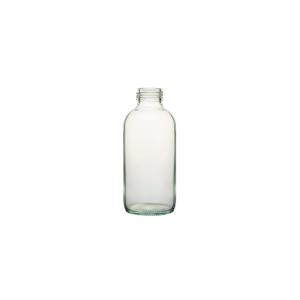
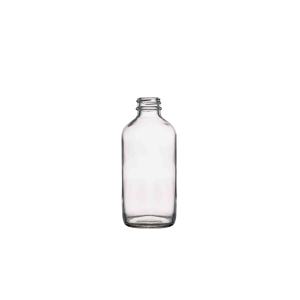
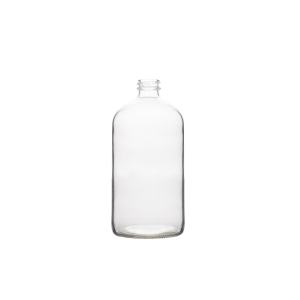
Amber Glass vs. Clear Glass Boston Round Bottles
Both amber and clear glass can be appropriate for cosmetic packaging, but they serve different priorities.
| Feature | Amber Glass | Clear Glass |
|---|---|---|
| Product visibility | Limited | High |
| Light exposure | Reduced compared with clear glass | Higher |
| Typical visual positioning | Botanical, apothecary, natural, clinical | Clean, modern, transparent |
| Formula color visibility | Lower | Excellent |
| Decoration potential | High | High |
| Common cosmetic uses | Serums, oils, botanical formulas | Serums, toners, oils, general skincare |
Neither option is automatically better.
If formula visibility is important to the brand experience, clear glass may be preferable. If reducing light exposure is an important packaging objective, amber glass may be worth evaluating.
The decision should ultimately reflect formula requirements, brand positioning, stability testing, and the desired consumer experience.

How Should You Request a Quote for Bulk Boston Round Bottles?
A detailed RFQ helps packaging suppliers identify suitable options faster.
Instead of asking only for “30 ml amber bottles,” provide as much project information as possible.
A useful RFQ can include:
- Required bottle capacity
- Estimated order quantity
- Annual volume
- Amber or custom glass color
- Target neck finish
- Required closure type
- Dropper or pump specifications
- Formula category
- Decoration requirements
- Label dimensions, if applicable
- Target market
- Destination country
- Required delivery schedule
- Sample requirements
If you already have an existing bottle, technical drawing, closure sample, reference image, or filling-line requirement, include it during the sourcing stage.
The more technical information available at the beginning, the easier it is to narrow down suitable packaging options.
What Cosmetic Products Work Well with Boston Round Bottles?
Boston round bottles are particularly useful for liquid and low-viscosity products that benefit from controlled dispensing.
Facial Serums
A 30 ml Boston round bottle paired with a pipette is a recognizable format for many serum categories. The dispensing system allows consumers to control the amount applied.
Facial and Body Oils
Amber bottles can complement botanical and natural-oil positioning while pumps, droppers, or reducers can be selected according to viscosity and dosage requirements.
Essential-Oil Blends
Small-format amber bottles are commonly considered for concentrated oil products where controlled dispensing is important.
Hair and Scalp Treatments
Larger Boston round formats can work for scalp oils and liquid hair treatments, depending on the required applicator and viscosity.
For brands comparing different serum and oil packaging formats, Berlin Packaging APAC’s glass dropper bottles for cosmetics and personal care provide additional sourcing options.
Frequently Asked Questions About Amber Glass Boston Round Bottles Bulk
What are amber glass Boston round bottles used for?
They are commonly used for liquid products such as facial serums, essential-oil blends, facial oils, body oils, hair treatments, botanical extracts, and other personal-care formulations. The appropriate application depends on the formula and dispensing system.
What size Boston round bottle is best for skincare?
There is no universal best size. Smaller bottles can suit concentrated treatments and samples, while 30 ml is frequently considered for facial oils and serums. Larger capacities can be appropriate for haircare and body-care products. The correct size should reflect dosage, retail positioning, formula cost, and consumer usage.
Can Boston round bottles use droppers and pumps?
Yes, depending on the bottle’s neck finish and component compatibility. Buyers should confirm the specifications of the bottle and closure rather than assuming that any dropper or pump will fit.
Can amber Boston round bottles be customized?
Depending on the bottle and production requirements, customization may include printing, labeling, coating, frosting, logo decoration, custom closures, and other decorative treatments.
Is amber glass better than clear glass for cosmetics?
It depends on the formula and branding objectives. Amber glass can reduce light exposure compared with clear glass, while clear glass provides greater visibility of the product. Stability and compatibility testing should guide the final packaging decision.
What should I test before ordering bottles in bulk?
Test the bottle, closure, formula, decoration, and dispensing system together. Depending on the product, testing may include leakage, compatibility, stability, dispensing performance, decoration adhesion, transport performance, and filling-line trials.
Where can cosmetic brands source wholesale glass packaging?
Berlin Packaging APAC supplies packaging solutions for cosmetic and personal-care projects, including glass bottles, droppers, cream jars, closures, and customized packaging options.
Final Thoughts: Selecting the Right Amber Boston Round Bottle
Sourcing amber glass boston round bottles bulk should begin with the product rather than the bottle alone.
Capacity, formula compatibility, neck finish, closure performance, decoration, labeling, filling requirements, order quantity, logistics, and quality control all affect whether a packaging system will perform successfully in commercial production.
For cosmetic brands, private-label manufacturers, contract fillers, and distributors, working with a packaging supplier that can coordinate containers, closures, decoration, and supply-chain requirements can simplify development and reduce sourcing complexity.
Berlin Packaging APAC supports cosmetic packaging projects with glass containers, dispensing components, decoration options, and customized packaging solutions for international B2B customers.
When preparing your next project, start with the formula, required dispensing experience, target capacity, expected volume, and branding direction. From there, the right amber Boston round bottle can be selected as part of a complete packaging system—not simply as an empty container.